
Neighbors and trees · Arkansas
Neighbor Tree Laws in Arkansas: Branches, Fallen Trees and Who Pays
Overhanging limbs, roots under the fence and storms that drop one neighbor’s tree on another’s roof cause a lot of disputes. Here are the general rules most U.S. courts follow, what we could and couldn’t confirm for Arkansas, and how to handle it without a fight.
Requests go to independent local tree service providers. Tree Service Jonesboro is a free referral service.
By the Tree Service Jonesboro editorial teamFact-checked against local sources (how we check)Updated
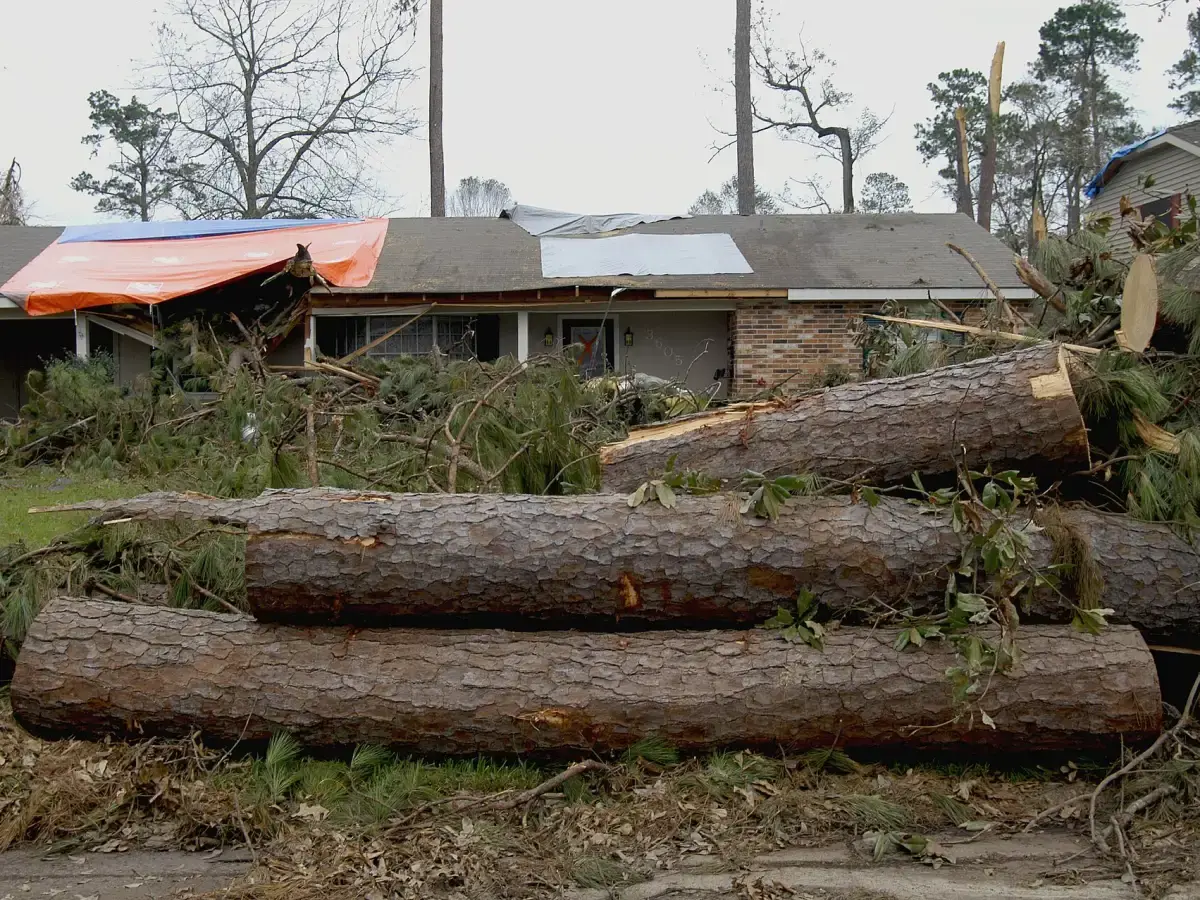
If a neighbor’s healthy tree falls on your house in a storm, your own homeowners policy usually pays, minus your deductible. The neighbor may be liable if the tree was dead or neglected. You can generally trim branches back to the property line, but not go onto their land, harm the tree or throw the branches back into their yard.
Not legal advice. We did not find an Arkansas statute that specifically governs overhanging branches or neighbor tree disputes, so this page explains the general rules described by legal publishers. State and local law vary; for a real dispute, talk to an Arkansas real estate attorney.
If a neighbor’s tree falls on my house, who pays?
Usually your own homeowners insurance, minus your deductible. A healthy tree that falls in a storm is generally treated as an act of nature, so the tree’s owner isn’t at fault. The exception is neglect: if the tree was dead, diseased or rotting and the owner didn’t deal with it, they could be liable for the damage. If you warned your neighbor about a dead tree, keep the texts or letters.
Sources: FindLaw, Conflicts involving trees and neighbors (updated July 2026); Consumer Reports; Texas Department of Insurance.
Who pays if a neighbor’s tree falls on my car?
Your auto insurance, if you carry comprehensive coverage. Homeowners insurance generally doesn’t cover vehicles. As with houses, a neighbor who neglected an obviously dead tree may be responsible.
Can I trim my neighbor’s branches that hang over my yard?
Generally yes, with limits:
- Only up to the property line. You can cut branches that cross onto your side, not beyond it.
- Don’t harm the tree. Cutting that badly damages or kills a neighbor’s tree can make you liable, in some places for up to three times the tree’s value, FindLaw notes.
- Don’t go onto their property to do the trimming without permission.
- Tell them first. FindLaw advises warning the tree’s owner before you trim.
For big limbs over a roof, ask a tree service to do it. A crew can make proper cuts at the line without weakening the tree, and limbs near power lines are a job for the electric utility first.
Can I throw my neighbor’s branches back into their yard?
No. FindLaw says you shouldn’t “return” branches or leaves by putting them in the neighbor’s yard, and you shouldn’t put fallen branches on their land without permission. Dispose of them yourself: in Jonesboro, limbs up to 10 feet long and 8 inches across can go to the curb for the city’s free monthly pickup.
What about roots and leaves?
Roots that cross the line are a harder question, and we did not find a clear Arkansas rule, so ask an attorney before cutting large roots on a neighbor’s tree. There is also a practical risk: cutting major roots close to the trunk can make a tree unstable and more likely to fall, which is a bigger problem for both of you. Leaves, acorns and sweetgum balls dropping over the fence are rarely worth a dispute; a friendly conversation usually goes further.
How to handle it without a fight
- Talk first, with photos of the problem limb or the dead tree.
- Get a tree pro’s opinion if you disagree about whether a tree is dangerous.
- Put it in writing: a short note or text saying what you’re concerned about and when you raised it.
- Share the cost of a removal when the tree is on the line or affects both homes; agree in writing first.
- Call your insurer if a tree has already fallen; let the insurers sort out who pays.
Need a tree checked or trimmed at the line?
Send photos of the tree and the property line. Say if it’s a shared tree or a neighbor’s tree.
Neighbor tree FAQ
If my neighbor’s tree falls on my house, who pays?
Usually your own homeowners policy, minus your deductible. If the tree was dead or neglected, the neighbor may be liable. Report it to your insurer first.
Can I cut my neighbor’s tree branches?
Generally you can trim branches back to the property line, without entering their property or harming the tree. Tell your neighbor first. This is general information, not legal advice.
Can I throw my neighbor’s branches back over the fence?
No. Dispose of branches you cut yourself. In Jonesboro, limbs up to 10 feet long and 8 inches across can go out for the city’s free curbside pickup.
Is there an Arkansas law about overhanging branches?
We did not find an Arkansas statute that specifically covers overhanging branches. The general rules above come from legal publishers; ask an Arkansas attorney about a specific dispute.
Tree problem at the property line?
Send a request to reach a local tree pro in Jonesboro who can trim at the line or remove a dangerous tree.