
Insurance guide · Arkansas
Does Homeowners Insurance Cover Tree Removal in Arkansas?
Sometimes. It depends on what the tree hit, why it fell and what your policy says. Here is how it usually works, in plain English, with the steps that help a claim go smoothly.
Requests go to independent local tree service providers. Tree Service Jonesboro is a free referral service.
By the Tree Service Jonesboro editorial teamFact-checked against local sources (how we check)Updated
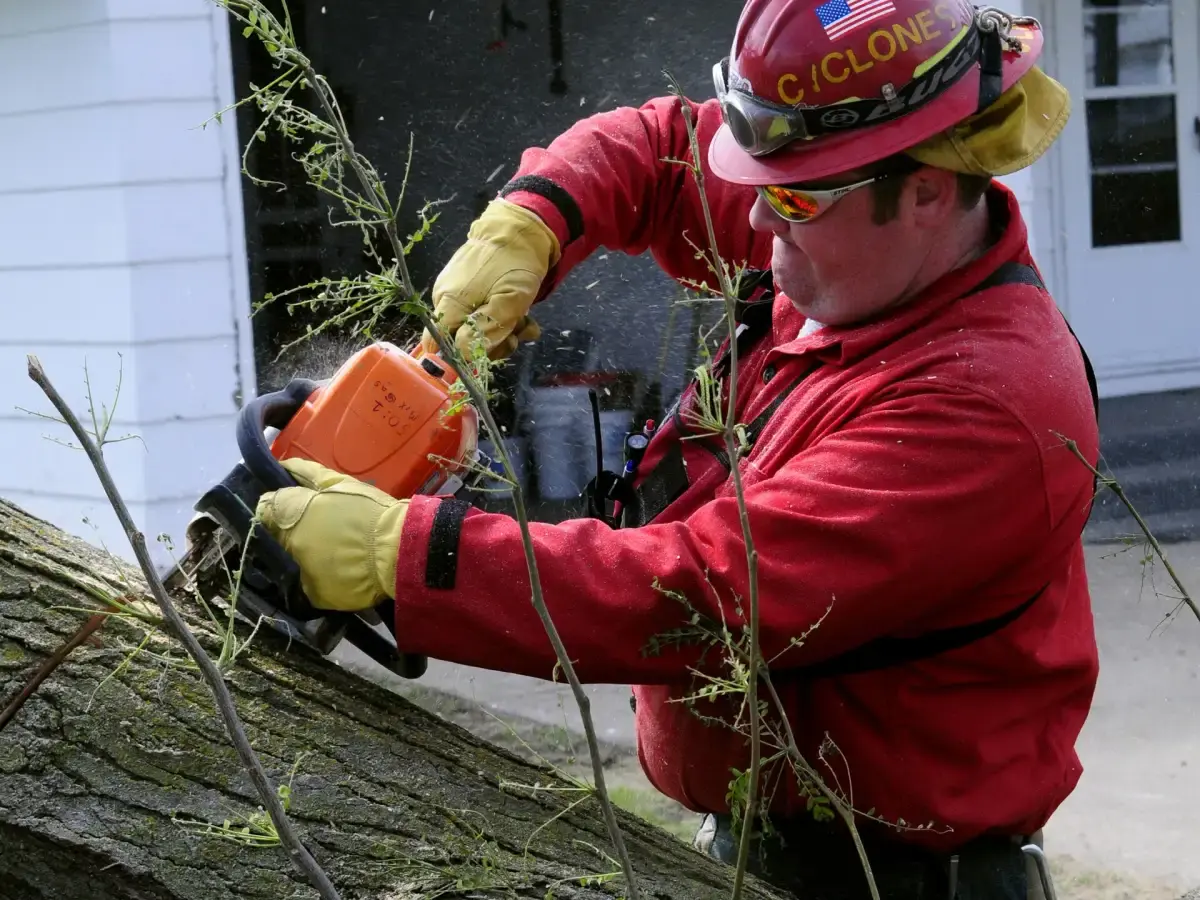
Homeowners insurance usually pays when a tree falls on your house or another covered structure, including part of the cost to remove it, often capped at about $500 to $1,000. It usually does not pay to remove a tree that fell and hit nothing, or a tree that hasn’t fallen. A tree on your car is an auto insurance claim.
General information, not insurance advice. Policies differ; read your own policy or ask your agent.
When insurance usually covers tree removal
- A tree falls on your house, garage or a covered structure in a storm: the damage is usually covered, and many policies pay something toward removing the tree.
- A neighbor’s tree falls on your house: usually your own policy handles your damage, minus your deductible.
- A tree blocks your driveway: some policies help with removal even without structural damage, according to the Texas Department of Insurance.
When it usually doesn’t
- A tree falls in the yard and hits nothing. Removal is usually your cost.
- Preventive removal of a dead or leaning tree that hasn’t fallen. Insurance pays for sudden damage, not maintenance.
- A tree on your car is not a homeowners claim; your auto policy pays if you have comprehensive coverage.
- Costs above your policy’s tree removal limit, and anything below your deductible.
Sources: Consumer Reports, When a tree falls, who pays? (citing the Insurance Information Institute on removal limits); Texas Department of Insurance, Does insurance cover fallen tree branches? (January 2026); Arkansas Insurance Department, which notes that not all policies cover debris or tree removal.
Does insurance cover tree removal after a storm?
Often, if the storm put the tree on a structure. Storms are the classic covered event: wind, hail, lightning and the weight of ice. Northeast Arkansas sees all of them, from the January 2009 ice storm that left parts of Craighead County without power for up to two weeks to the March 28, 2020 Jonesboro tornado. If the storm only knocked a tree down in an open part of the yard, expect to pay for the cleanup yourself.
Is a dead tree covered?
The question is usually who was responsible. A healthy tree that falls in a storm is generally treated as nobody’s fault. If a tree was clearly dead or rotting and the owner ignored it, the owner can be liable for the damage it causes, which matters most when the tree belonged to a neighbor. Removing a dead tree before it falls is the cheapest fix. See dead and hazardous tree removal.
How much will insurance pay to remove the tree?
Many policies cap tree removal separately from the house damage. Consumer Reports, citing the Insurance Information Institute, says insurers generally limit what they’ll pay to remove the tree to about $500 or $1,000. Your deductible applies too. For comparison, emergency tree removals in Jonesboro average about $707 (Today’s Homeowner), and crane jobs on roofs can cost more.
How to file a tree damage claim
- Safety firstCall 911 for injuries or downed lines. Get everyone out of damaged rooms.
- Photograph and video everythingThe tree, where it came from, the roof, inside damage, fences and cars, before anything is moved.
- Call your insurer earlyAsk whether they want an adjuster to see the tree before it is removed.
- Get a written quoteItemized: removal from the structure, tarping, hauling, cleanup.
- Keep every receiptTarps, hotel nights, tree work and repairs.
The Arkansas Insurance Department’s Consumer Services Division can help with questions about a claim: 1-800-852-5494 (AID). Be careful with any contractor who tells you not to call your insurer; the Arkansas Attorney General’s office warns against exactly that.
What about taxes?
For most homeowners, tree damage isn’t tax deductible. Since tax year 2018, personal casualty losses are generally deductible only when caused by a federally declared disaster (IRS Topic 515). Ask a tax professional about your situation.
Need the tree removed?
Send photos and tell us whether insurance is involved; the pro can itemize the quote for your claim.
Tree removal insurance FAQ
Does homeowners insurance cover tree removal after a storm?
Usually when the tree damaged your house or another covered structure, often with a removal limit of about $500 to $1,000. A tree that falls in the yard without hitting anything usually isn’t covered.
Does homeowners insurance cover preventive tree removal?
Generally no. Insurance covers sudden damage, not removing a tree before it falls. Removing a dead tree early is usually cheaper than an emergency job.
Who pays if a neighbor’s tree falls on my car?
Your auto insurance, if you have comprehensive coverage, according to the Texas Department of Insurance. If the neighbor neglected a dead tree, they may be liable.
Does insurance cover a dead tree falling on my house?
Damage to your house is often covered, but a neglected dead tree can raise questions about responsibility, especially if it was a neighbor’s. Check your policy and talk to your agent.
Tree damage after a storm?
Send a request to reach a local crew that can remove the tree and give you an itemized quote for your insurer.