Hazard trees · Jonesboro, AR
Dead and Hazardous Tree Removal in Jonesboro, AR
A dead or failing tree near the house is a problem that gets worse, not better. Send a request to reach a local crew that takes down dead, cracked and leaning trees safely, and send photos so they can plan the right equipment.
Requests go to independent local tree service providers. Tree Service Jonesboro is a free referral service.
By the Tree Service Jonesboro editorial teamFact-checked against local sources (how we check)Updated
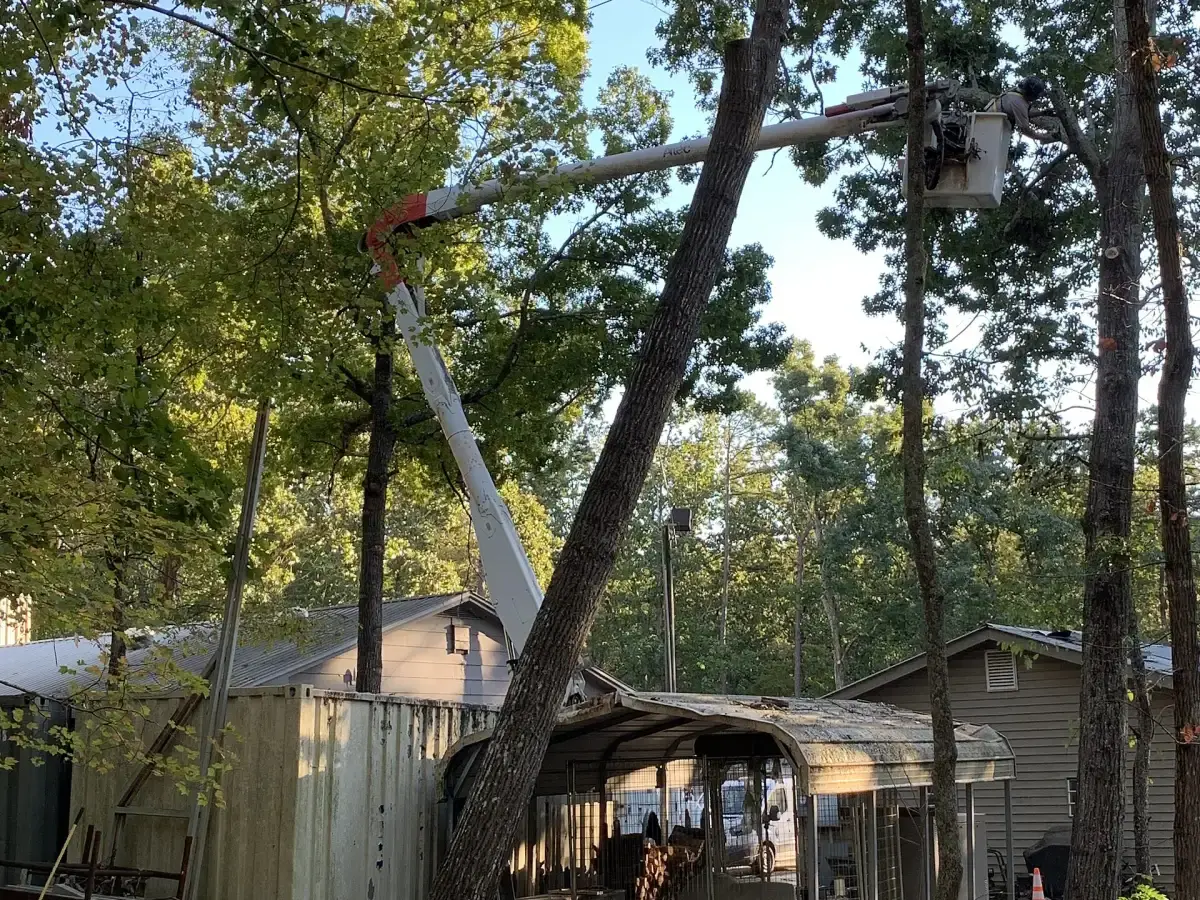
A hazardous tree is one likely to fail and hit something: a dead tree, a cracked or hollow trunk, a split fork, a new lean or lifting roots. Removing it before a storm is safer and usually cheaper than an emergency job. In Jonesboro, most removals cost about $186 to $740, while emergency removals average about $707.
Warning signs of a dangerous tree
- Dead or mostly dead: no leaves in season, bark peeling off, brittle limbs dropping.
- Cracks in the trunk or where large limbs join it.
- Split fork: two big trunks pulling apart at a tight V.
- Hollow or rotten wood: cavities, soft wood, mushrooms or fungus at the base.
- A new or growing lean, especially with cracked soil or roots lifting on the far side.
- Dead top or hanging limbs caught in the canopy after a storm.
One sign alone doesn’t always mean removal. A good crew, or an ISA Certified Arborist for a valuable tree, can tell you whether pruning, cabling or removal is the right call. What raises the urgency is what the tree could hit: a house, a bedroom, a driveway, a play area or power lines.
How it’s done
How crews remove dead and dangerous trees
Dead wood is brittle and unpredictable, which changes how the tree comes down:
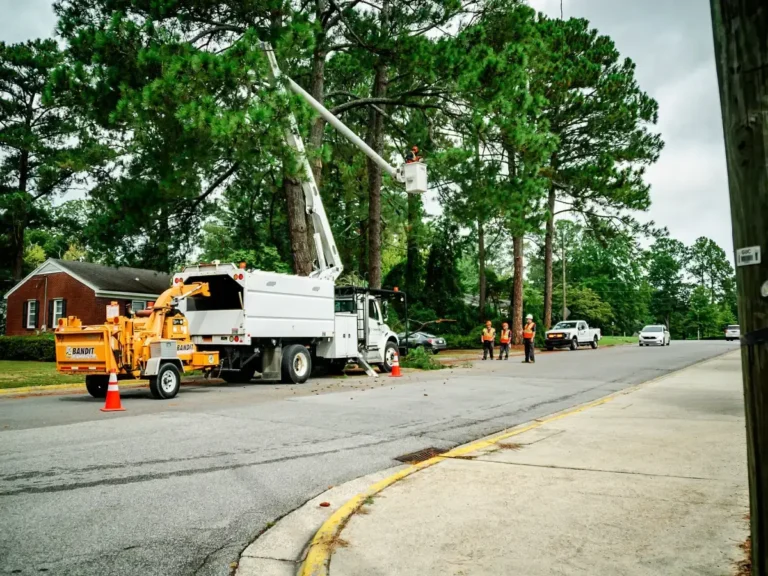
- Bucket truck instead of climbing. If a dead tree isn’t safe to climb, the crew works from a lift where the truck can reach.
- Crane removal. For large hazard trees over houses with no safe way to climb or lower pieces, a crane lifts sections over the roof. It costs more but can be the safest option.
- Rigging near structures. Pieces are tied off and lowered on ropes instead of dropped near the house, fence or lines.
- Utility first near lines. If the tree touches or overhangs a power line, the electric utility deals with the line clearance first.
What dead tree removal costs in Jonesboro
A dead tree usually costs about the same as a living tree of the same size, within the Jonesboro range of about $186 to $740 for most removals, with medium trees about $443 to $605 and trees over 60 feet around $1,000 or more. It can cost more if the wood is too brittle to climb and the crew needs a bucket truck or crane. Waiting until it falls usually costs more: emergency removals average about $707.
Sources: Today’s Homeowner; Homeyou. Full breakdown: Jonesboro tree removal cost guide.
Dead trees, neighbors and insurance
Homeowners insurance generally pays for damage when a tree falls on your house, but not for removing a tree that hasn’t fallen. A dead tree also matters for liability: if a neighbor’s tree was diseased or rotting and they neglected it, they may be responsible for the damage it causes, while a healthy tree that falls in a storm usually isn’t the owner’s fault. If your dead tree stands within reach of a neighbor’s house, removing it protects both of you.
Sources: FindLaw; Texas Department of Insurance. General information, not legal or insurance advice. More: neighbor tree rules in Arkansas.
Request a hazard tree removal quote
Send photos of the whole tree, the base and what it could hit. Say if it’s leaning more than before.
Dead and hazardous tree FAQ
How do I know if a tree is dangerous?
Look for dead wood, cracks, a split fork, hollow or rotten wood, mushrooms at the base, a new lean or lifting roots. The risk is highest when the tree could hit the house, a driveway or power lines.
Is it more expensive to remove a dead tree?
Usually about the same as a living tree of the same size. It can cost more if the wood is too brittle to climb and a bucket truck or crane is needed.
Will insurance pay to remove a dead tree before it falls?
Generally no. Homeowners insurance covers sudden damage, such as a tree falling on the house, not removing a tree that hasn’t fallen. Check your own policy.
Should I remove a dead tree in winter?
Winter is a good time: the tree is easier to see without leaves, crews are less busy than after spring storms, and you avoid emergency pricing if it would otherwise fall in a storm.
Related: tree removal in Jonesboro, storm damage cleanup, tree service in Nettleton, tree service in Bono.
Dead or leaning tree near the house?
Send a request to reach a local crew that removes hazard trees safely. Send photos and ask for a written quote.